It seems odd I suppose to actually want to spend a couple hours of one’s weekend touring a mausoleum, but when presented the opportunity to take part in a rare Portland tradition and visit a 123-year-old historic facility designed to care for the dead that only comes around once a year I decided I needed to learn more. I discovered I wasn’t the only one and that this is but only one phase of death planning in Oregon.
The Wilhelm’s Portland Memorial Mausoleum is the largest and oldest mausoleum west of the Mississippi, having opened in 1901. Its 8 stories and ~9 miles of hallways house the remains as of today of over 98,000 people, several of which date back to as early as the 1870s.
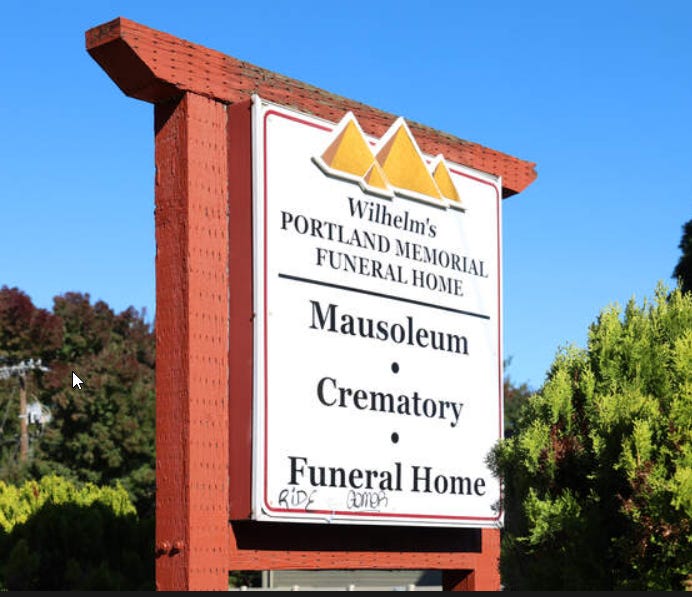
Typically, each year the mausoleum opens on Memorial Day weekend to visitors who desire to walk the underground facilities. However, due to a lot of publicity about its state of disrepair (The tour guide said the roof had never been replaced, just continuously patched over the past 123 years) the facility is undergoing major repairs throughout 2024, so the public isn’t allowed free reign at all and this year it was mandatory to pre-schedule to participate in one of the guided tours.
I arrived about 25 minutes early as the first visitor who had reserved a spot for the 2pm tour, but there was already a line of 25-30 people that were on standby for any spots that were available due to no-shows. At 2pm there were about 15-16 of us gathered, they pulled in another 7-8 from the standby line and with our guide leading the way we were off into the catacombs.
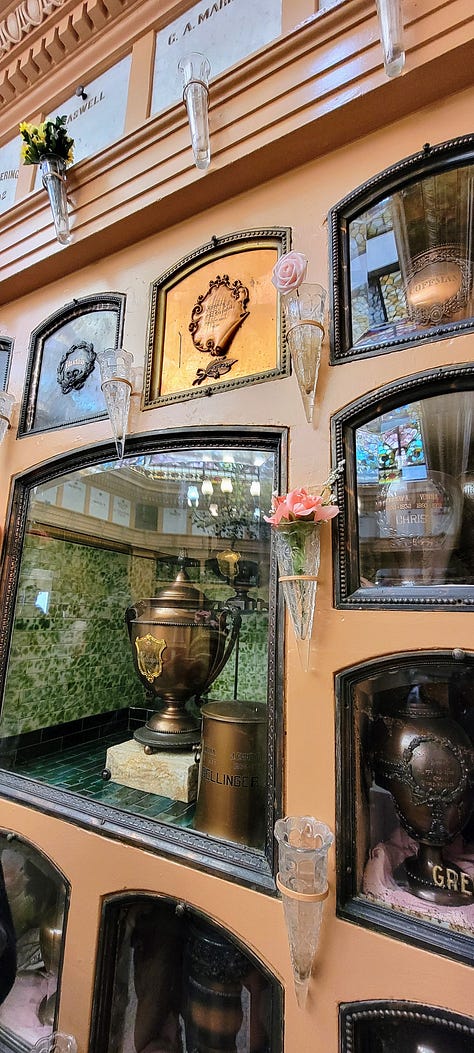
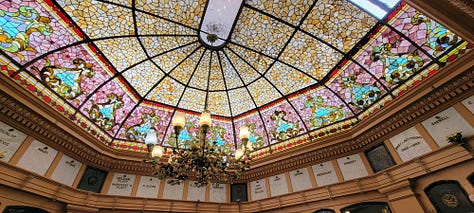
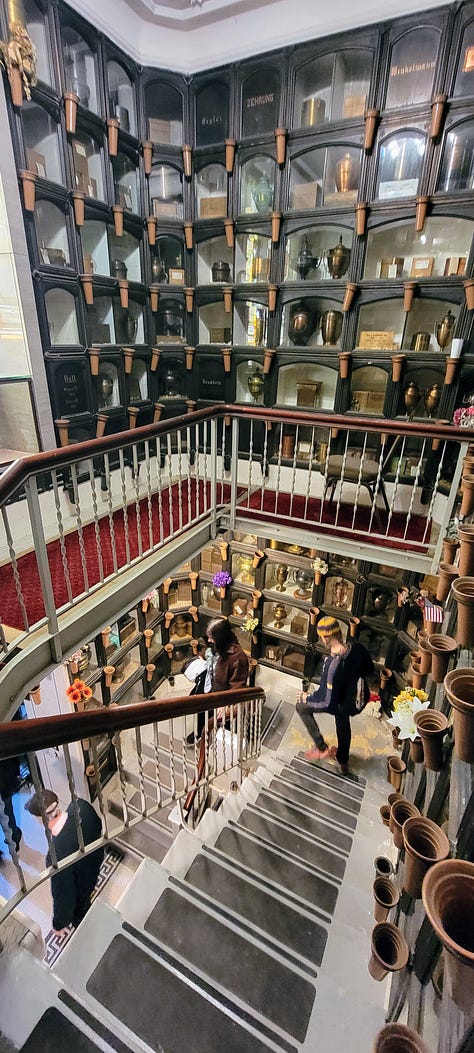
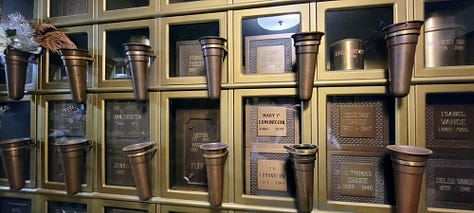
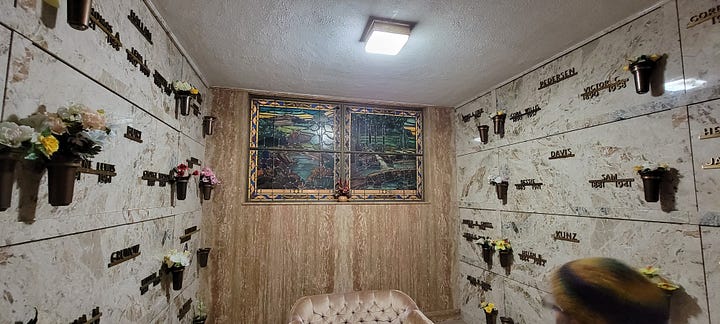
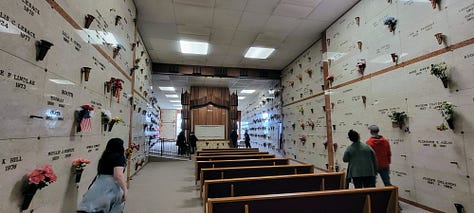
We immediately walked across the courtyard and entered the oldest portion of the facility where the guide proceeded to share the history of the place with us. It was interesting to learn about the persons (many famous Portland businessmen, politicians and founders), the design and architecture and accessories (each of the glass flower vases in the picture on the left above are original 123-year-old Tiffany & Co). After a brief talk we headed down the steep staircase (the facility has 8 levels and we saw portions of maybe 3 throughout the entire ~75-minute tour).
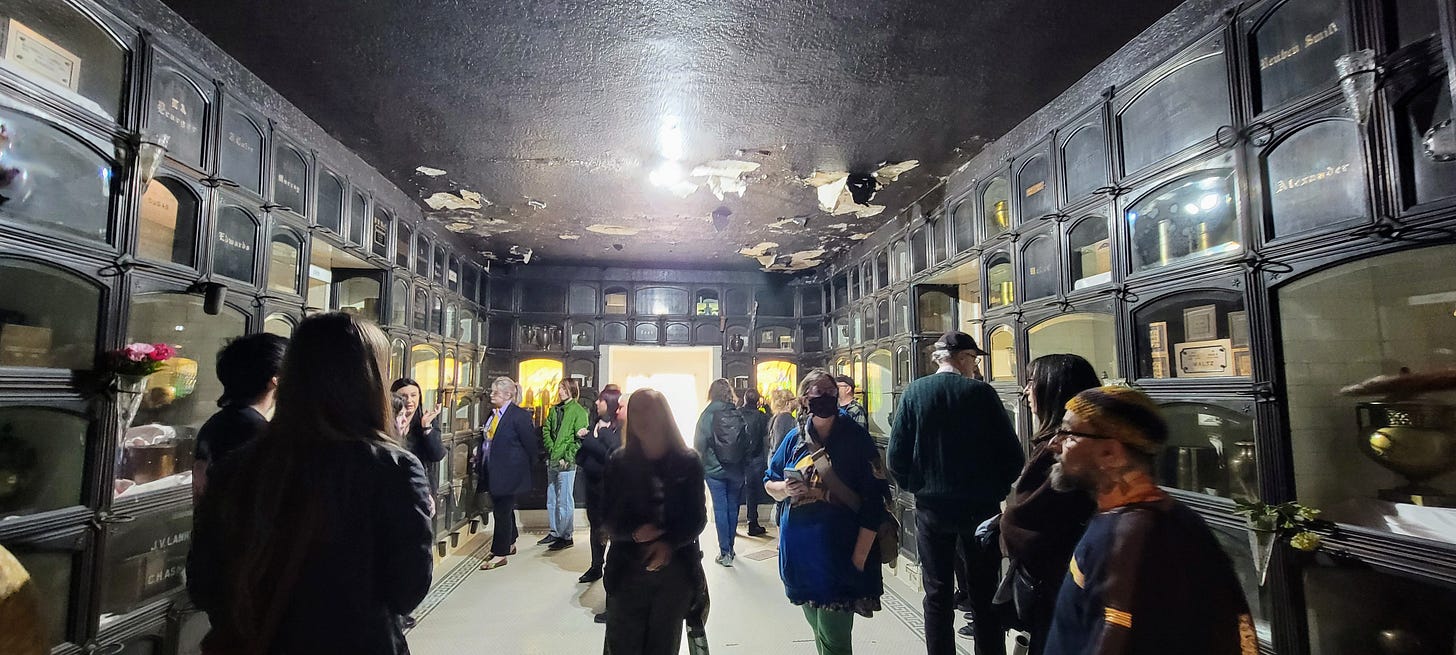
Along the path the guide led us on the disrepair was really only evident in this first room we visited (below) with the peeling painted ceiling. I didn’t really notice a lot of what is discussed in the KGW article above.
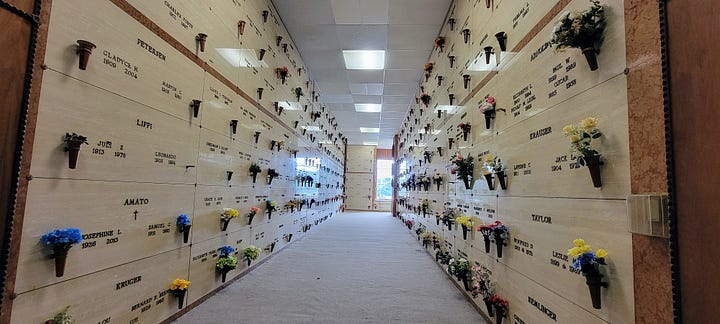
As we moved from one area to the next it was pretty easy to discern when that portion of the facility had been built both from the death dates of those interred but also the architecture. From the Roaring 20’s Art Deco wing, to the mid-century modern of the late 40’s and 50’s to the austere boringness of the 70’s and the complete blandness and lack of any style of the 90’s and newer.
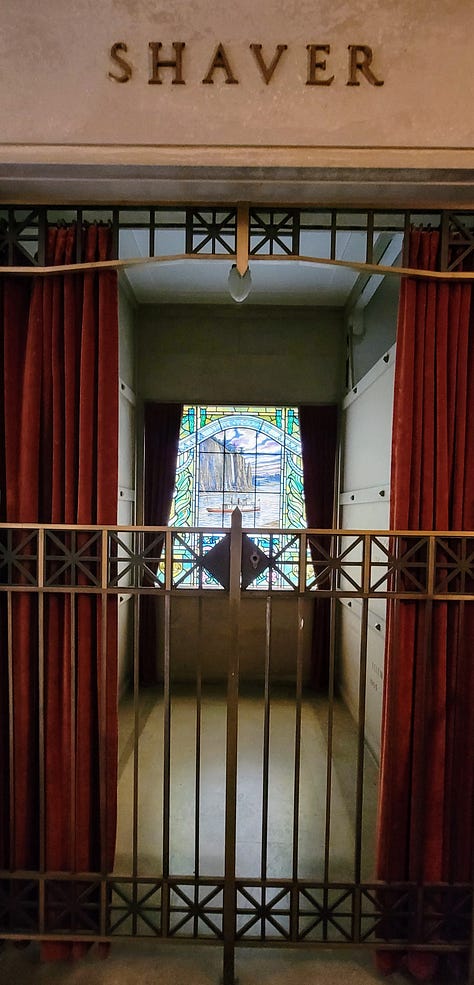
While the mausoleum is 8 stories deep, it’s built on a hillside so from the entrance it looks to be one level, but from the back most of the floors are exposed to light and many of the larger crypts have intricately painted lead glass windows that I’m sure shine beautifully on a full sunny day (it was partly cloudy on the day of my visit). Most of the lead glass windows were created by the Povey Brothers, famous Portland-stained glass makers known as the “Tiffany of the Northwest”.
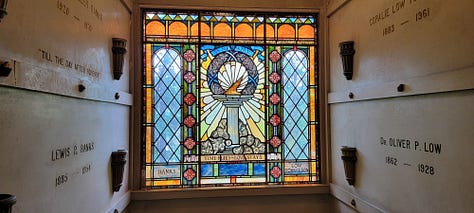
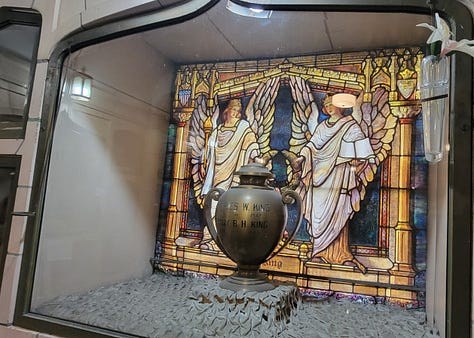
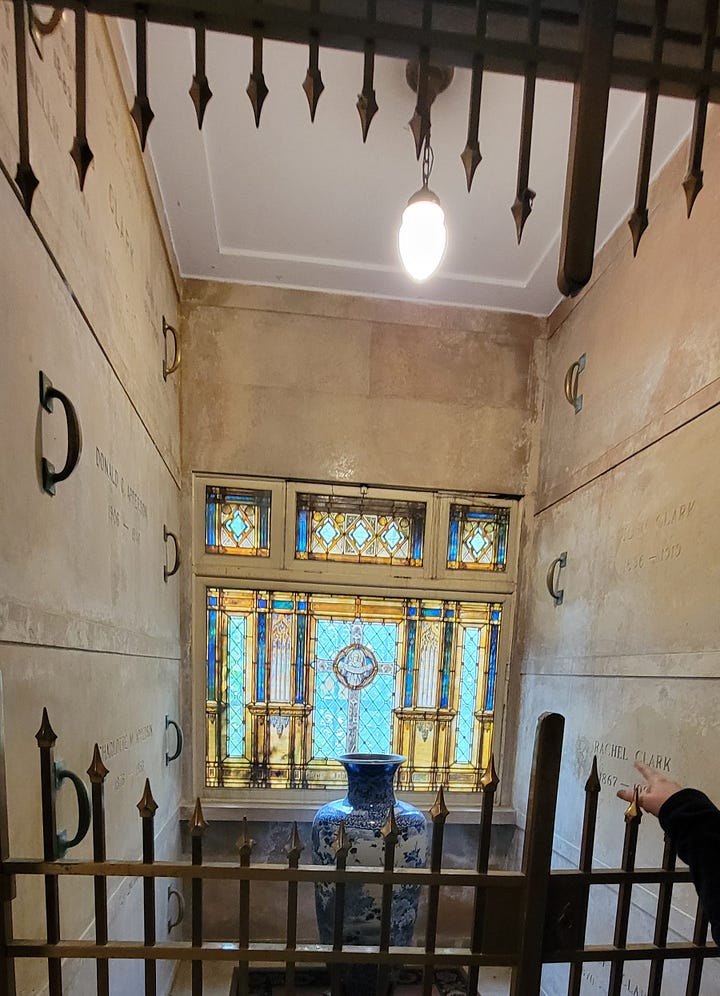
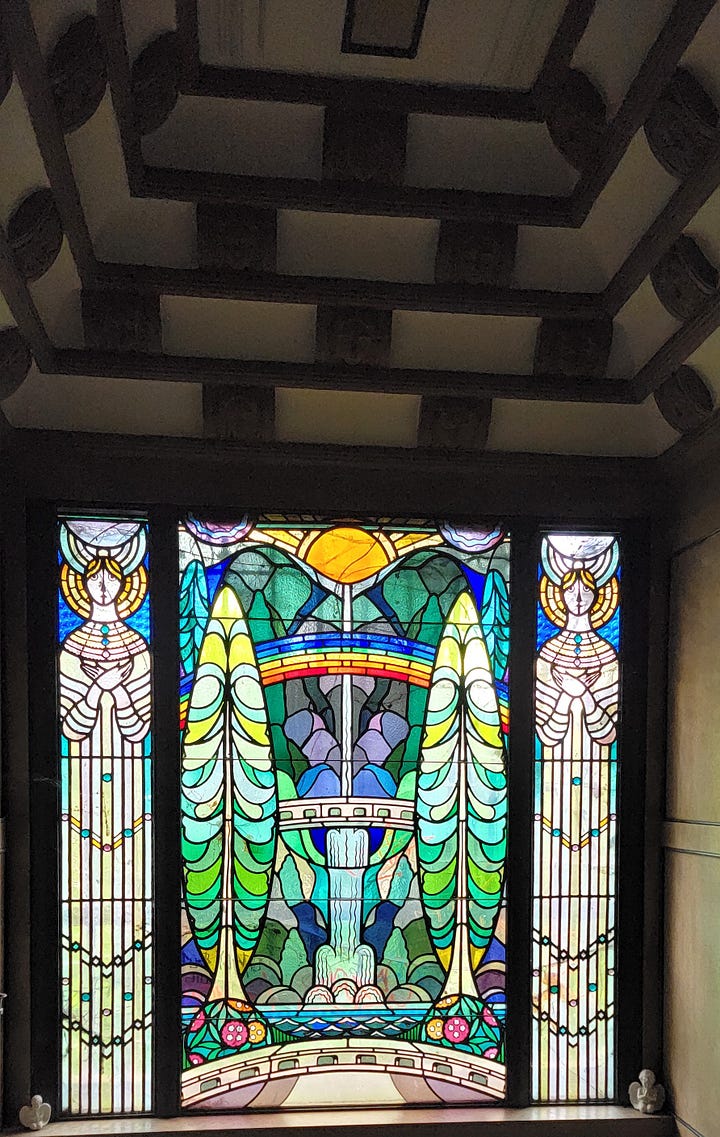
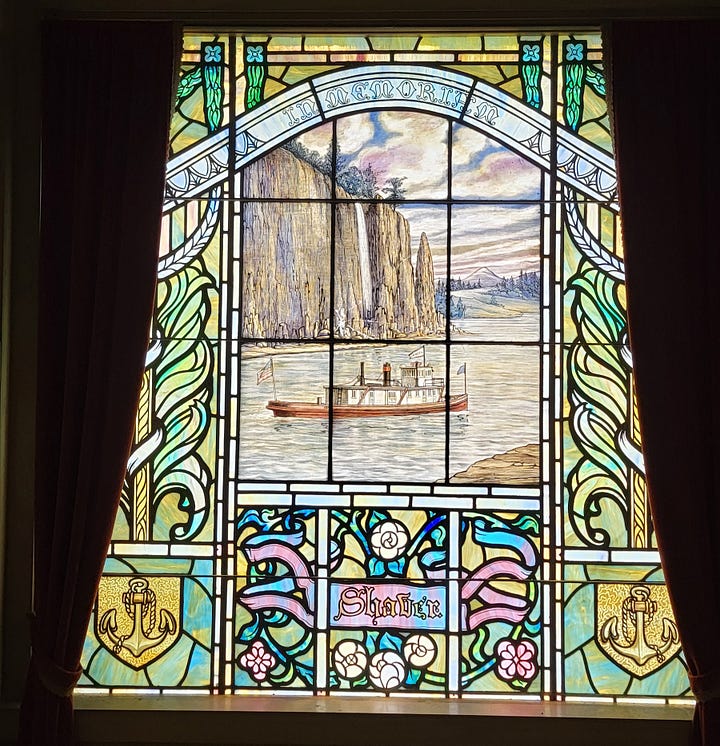
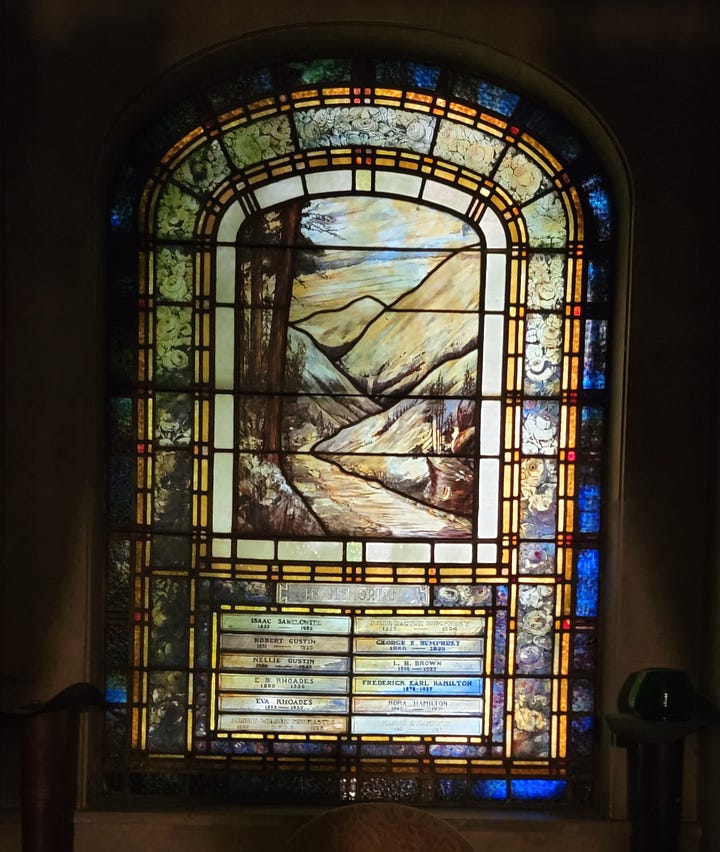
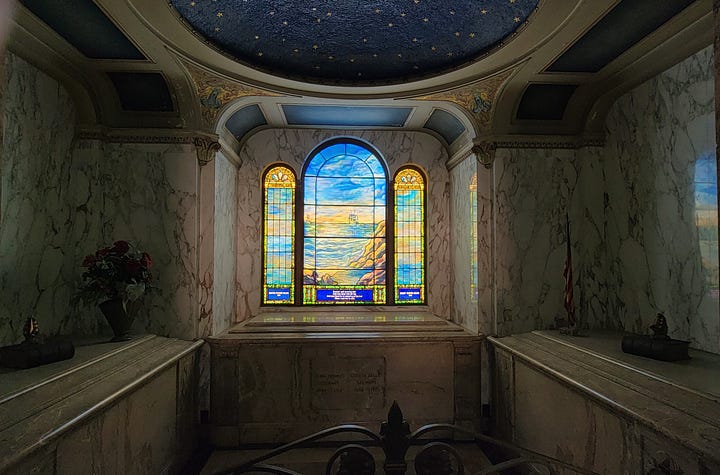
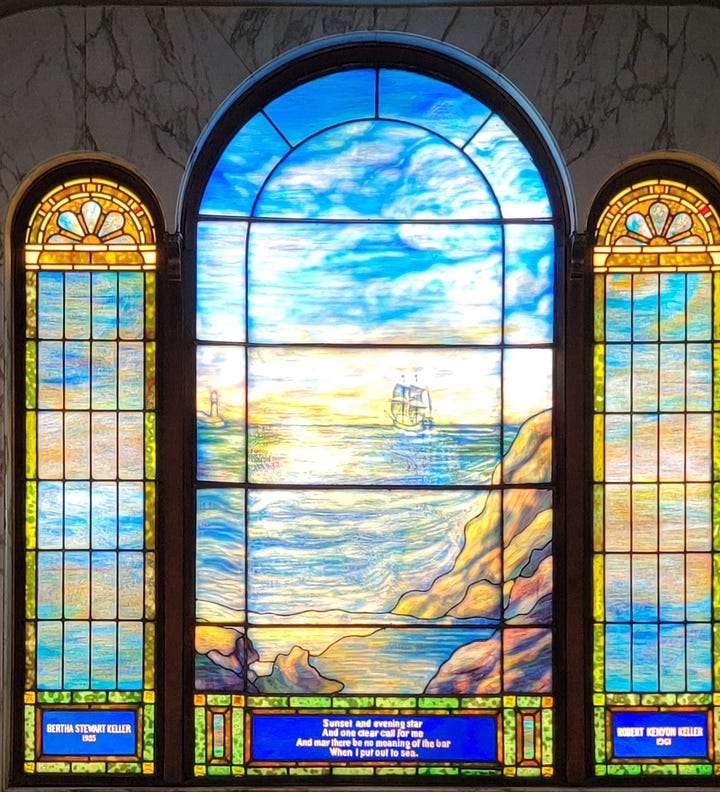
Except for this window below, which was the only one in the facility designed and created by Tiffany & Co. This is the crypt of the Keller family, known today as the namesake of Portland’s Keller Auditorium.
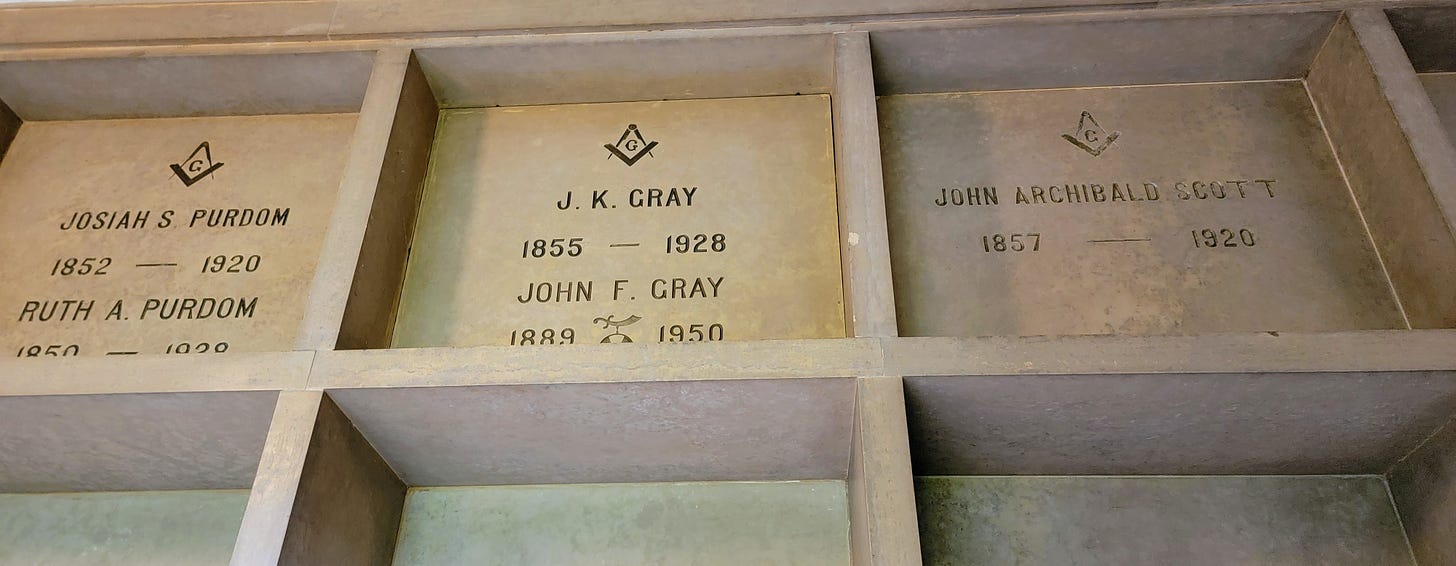
Given the history of America, and the prevalence of Freemasons in the establishment of the Northwest, it was not surprising to see so many Freemasons, Shriners, Order of the Eastern Star and other fraternal associations from the first half of the 20th century.
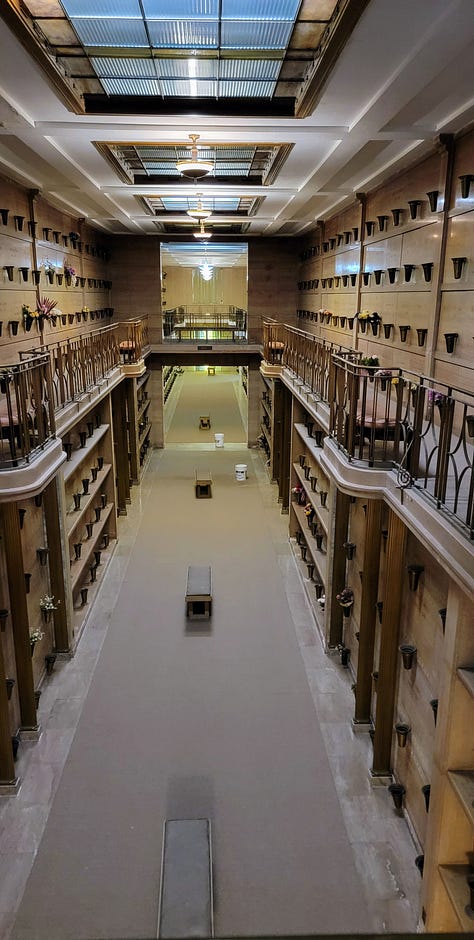
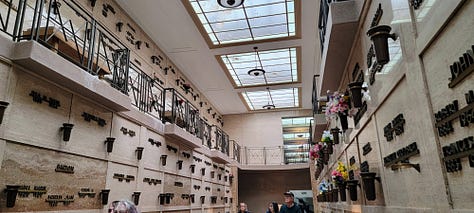
In one wing a fountain was built in the 1960’s in the 6-story atrium. The image on the left, taken from the 4th level, looks up to the 4th mezzanine where the fountain is, then further upwards to the 5th-8th levels. The image in the middle is looking down from the 6th level. During research I also found the picture on the right as we were not allowed on the mezzanine level during our tour.
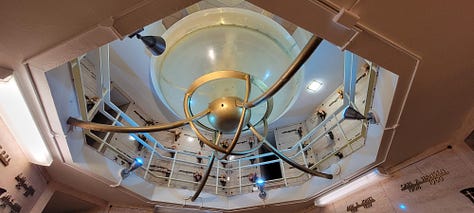
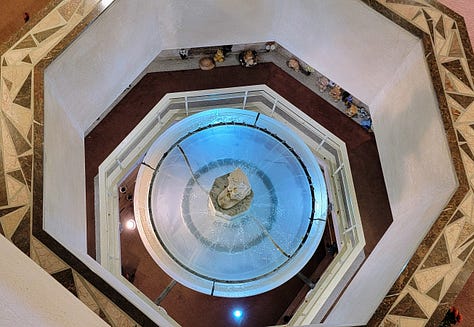
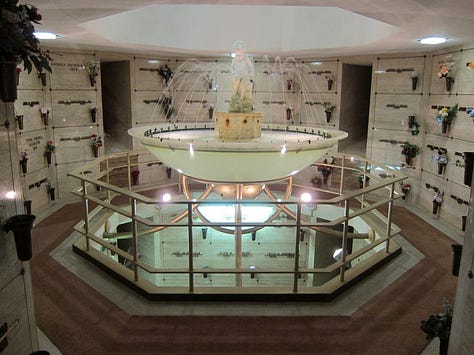
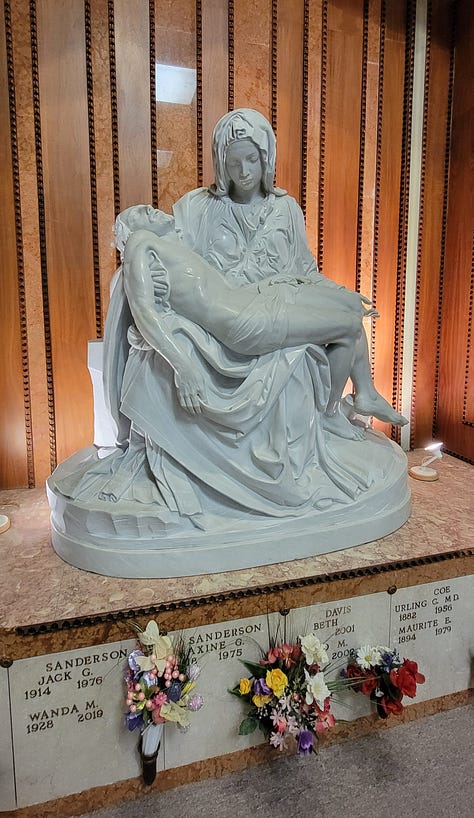
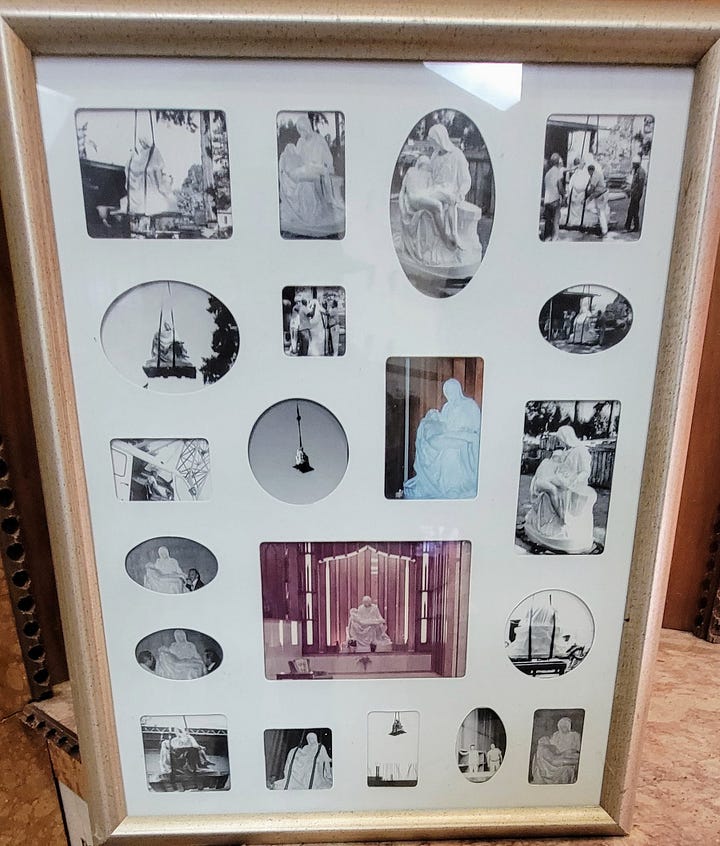
As far as I could tell, the footprint of each floor was fairly identical with each one having the same general features, but with different decor. For example, in one portion of the wing each floor had a chapel. Except for the floor containing one of three exact replicas around the world of Michaelangelo’s Pieta. They even had a picture board showing how they used a crane to move the 7,000-pound sculpture created from the same Italian marble quarry that Michaelangelo used.
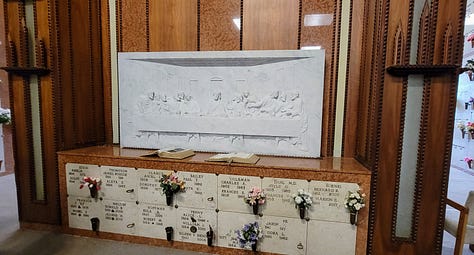
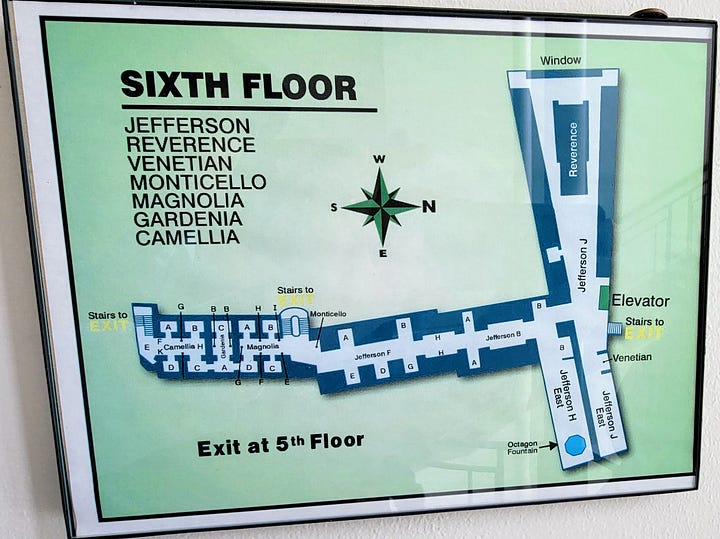
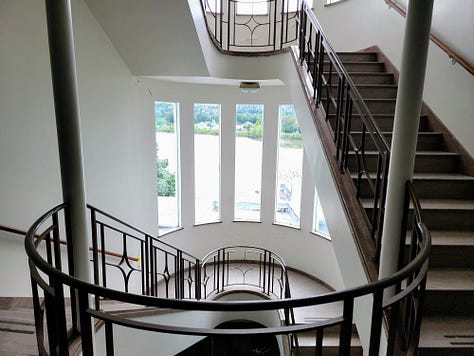
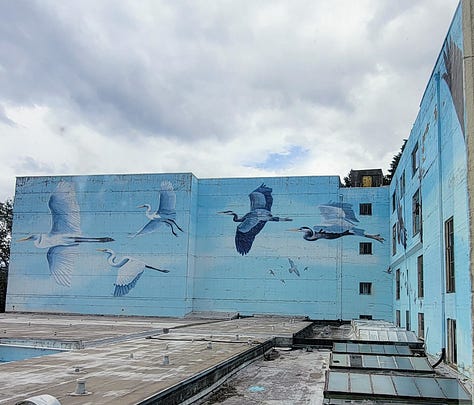
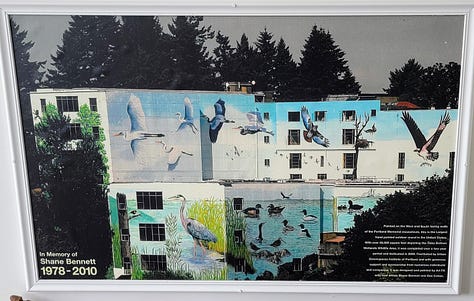
As I mentioned earlier, the back side of the facility is open to the outside and faces West towards the Willamette River. From the window one can see the famous mural painted on the outside of the building. This was at one time the largest outdoor mural in America.
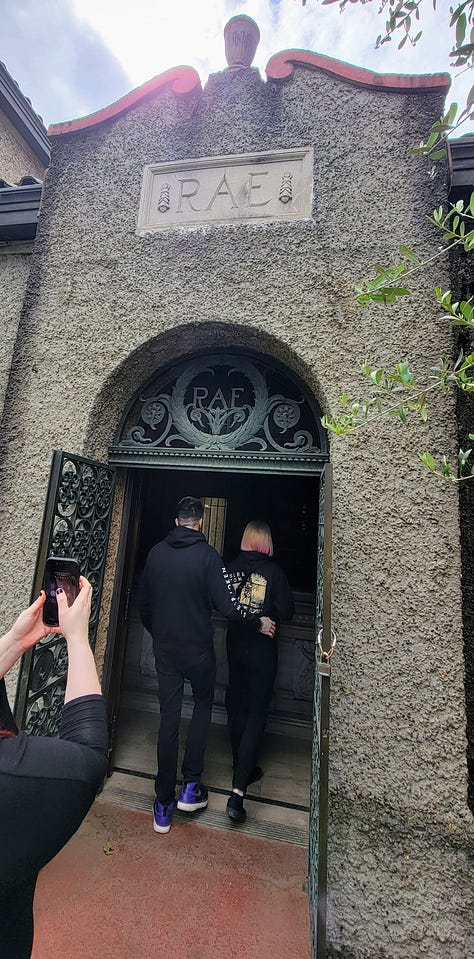
The last stop on the tour is the Rae crypt, the final resting place of George Rae, one of Oregon’s richest men at one point, and his second wife, Elizabeth. A book has been written about their scandalous history and this crypt.
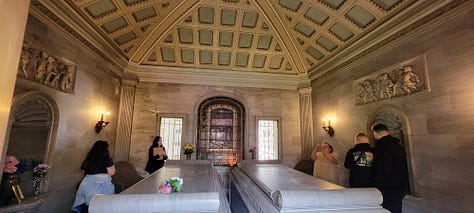
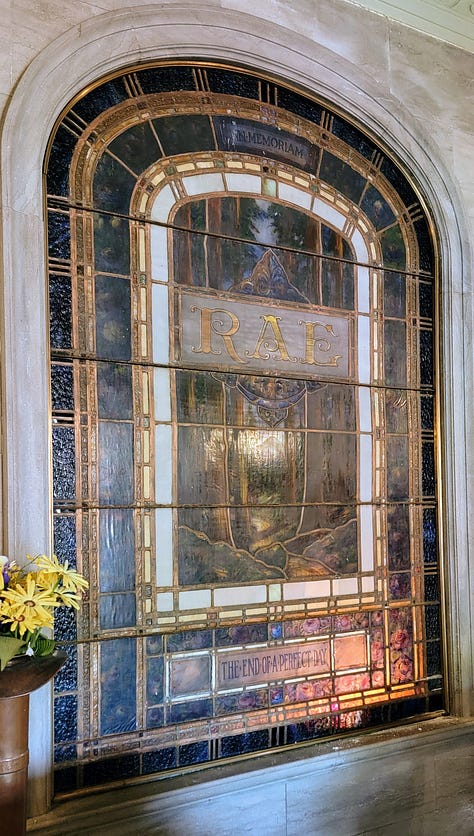
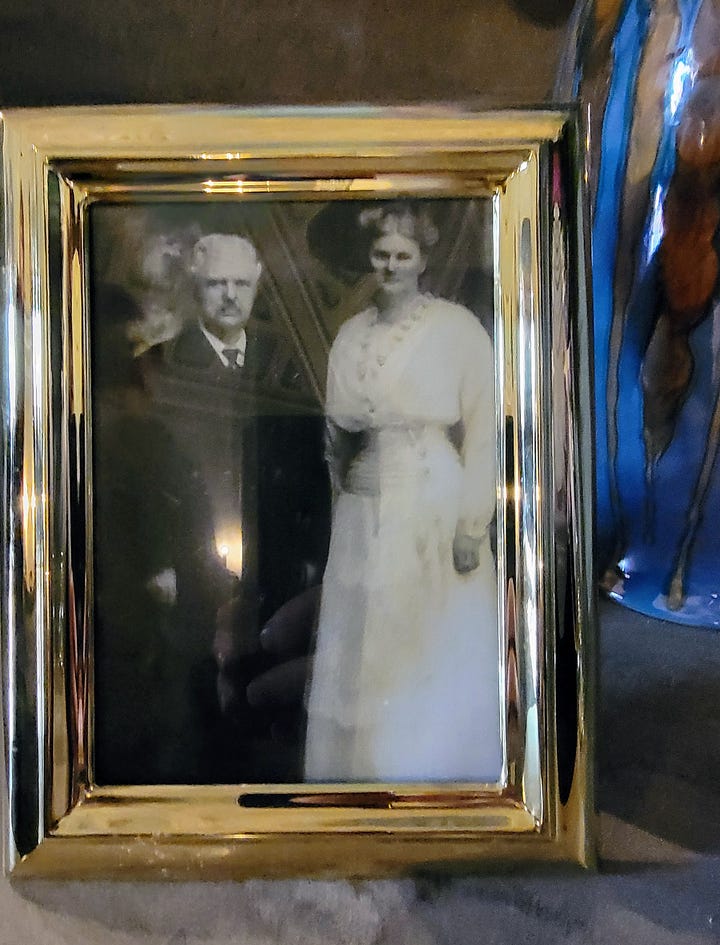
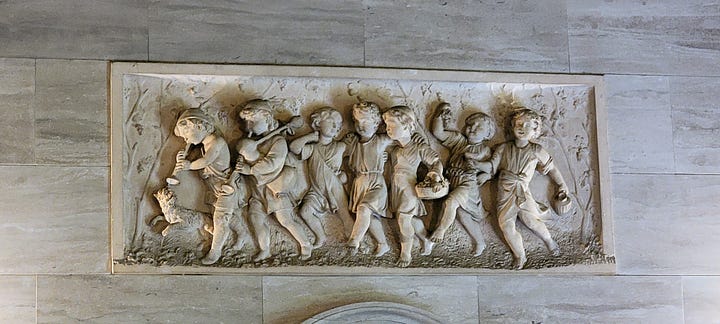
After completing the Rae crypt viewing the guide took us back to the chapel and plied us with cookies and coffee, asked us to fill out surveys about our death planning and asked us to sit down as another woman came in to talk to us… Uh oh. This is when it started to feel like I had received my free 2-night room reservation and was now in for a timeshare presentation. It turned out to be a soft sell of their services for a bearable ~5 minutes, then I was out the door.
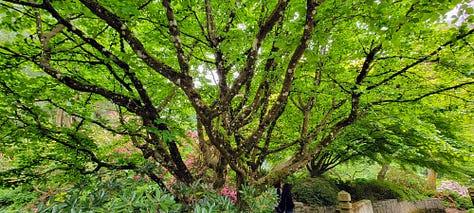
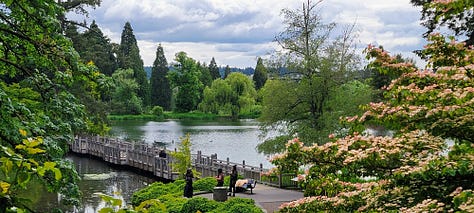
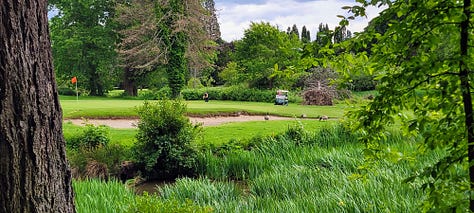
It was quite the interesting look into Portland’s past, but after all that focus on death it was time to move on to my next destination of the day, the Crystal Springs Rhododendron Garden, to all of the new life and rejuvenation it offered.
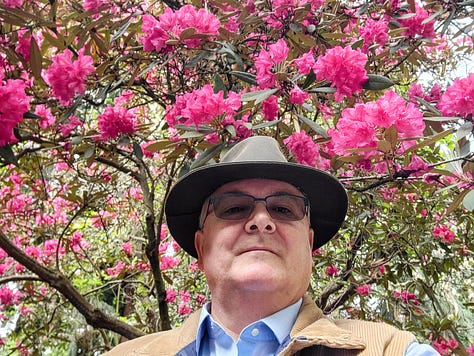
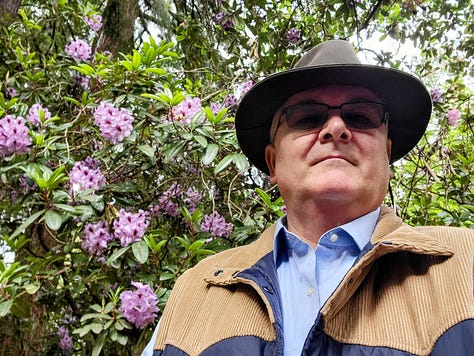
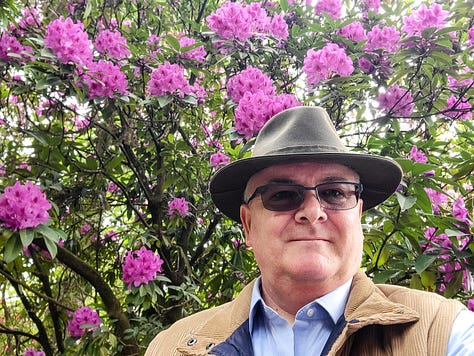
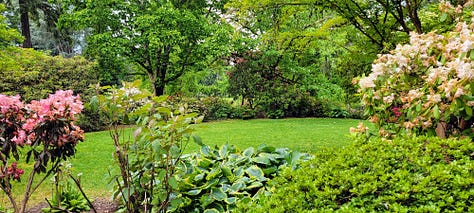
I’ve written about this garden before, and much like the Portland Japanese Garden, this space evolves every day throughout the year and each visit brings new and unexpected pleasures. Today, unlike my visit a month or two back, the rhododendron were in full bloom in multiple shades of white, red, pink, fuchsia and more.



Baby ducks were everywhere following their mothers around in the ponds picking at the moss and the geese were all lined up cleaning themselves.

The grounds were a lush green, the little grassy areas were inhabited by children running around or artists painting and the whole garden was very serene and full of life.
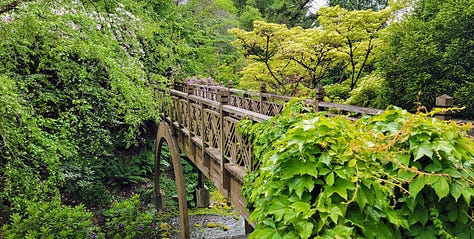
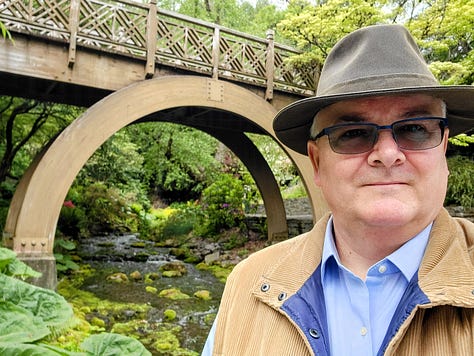
Overall, the afternoon was a really interesting and enjoyable juxtaposition of two very different but compelling things about Portland, it’s history and its ongoing natural beauty. A great start to a long holiday weekend.